artist needed money for college, people from tumblr/dA told them their prices were too expensive and that no one would commission them.
artist was desperate and logged on to their old Furaffinity account to take commissions
artist got a shitton of commissions and everyone was supportive and encouraging
people ended up tipping the artist 10-20$ per commission because they thought the artist was undercharging
tl;dr – furries supported artist and treated them better than the “pro-artist” sides of dA and tumblr.
so when’s cringe culture gonna wake up and realize that this weird baseless hatred of furries is largely rooted in the fact that it’s a community of 95% openly queer & sex-positive folk…
Zoology is a specific branch of biology, that studies the animal kingdom,
derived from the Ancient Greek zōion meaning "animal" and logos, meaning “study”, translating to “the study of animals”.
Under zoology there are many branches (specific fields of study) that researchers focus or specialise in. Think of it like the branches of a tree that split or as an umbrella.
Just as biology includes such fields like microbiology, botany, genetics, biochemistry and anatomy, zoology also can be further broken down into specific fields such as; ecology, ornithology, entomology and so on.
Scientists love labeling and breaking things down, hence why there is so many different branches or sub-disciplines. Here are some examples of the branches under zoology, and their definitions.
Taxonomic Sub-Disciplines
ARACHNOLOGY:
Derived from the Ancient Greek
arachnē
meaning “spider” and logia, meaning “study of”, translating to “the study of spiders”.
The scientific study of spiders and other arachnids such as harvestmen, scorpions and pseudoscorpions. Arachnology can be further divided into specific sub-disciplines such as:
acarology – the study of ticks and mites
araneology – the study of spiders
scorpiology – the study of scorpions
ENTOMOLOGY:
Derived from the Ancient Greek
entomon
meaning “insect” and logia, meaning “study of”, translating to “the study of insects”.
The scientific study of species in the class insecta or insects. Entomology can be further divided into specific sub-disciplines such as, but not limited to:
Coleopterology – the study of beetles
Dipterology – the study of flies
Odonatology – the study of dragonflies and damselflies
Lepidopterology – the study of moths and butterflies
Melittology (or Apiology) – the study of bees
HERPETOLOGY:
Derived from the Ancient Greek
herpein
meaning “to creep” and logia, meaning “study of”, translating to “the study of those that creep”.
The scientific study of poililothermic ectothermic tetrapods (herpetofauna) or amphibians and reptiles. Herpetology can be further divided into specific sub-disciplines such as, but not limited to:
Batrachology – the study of amphibians
Ophiology (or Ophidiology) – the study of snakes
Saurology– the study of lizards
Cheloniology (or testudinology) – the study of turtles and tortoises
ICHTHYOLOGY:
Derived from the Ancient Greek
ikhthys
meaning “fish” and logia, meaning “study of”, translating to “the study of fish”.
The scientific study of fish, including the bony fish (Osteichthyes), the cartilaginous fish (Chondrichthyes), and the jawless fish (Agnatha).Ichthyology can be further divided into specific sub-disciplines such as, but not limited to:
Osteichthyology – Study of bony fish
Chondrichthology – Study of cartilaginous fish
Elamobranchology – Study of sharks
MAMMALOGY:
Derived from the Late Latin mammalismeaning “of the breast” and the Ancient Greek logia, meaning “study of”.
The scientific study of mammals,
Also known as “mastology,” “theriology,” and “therology”. Mammalogy can be further divided into specific sub-disciplines such as, but not limited to:
Primatology – Study of primates
Cetology – Study of cetaceans
Cynology – The study of canines
Chiropterology – The study of bats
ORNITHOLOGY:
Derived from the
Ancient Greek
ornis
meaning “birds” and logia, meaning “study of”, translating to “the study of birds”.
The scientific study of the aves, a class of
vertebrates which comprises the birds.
Other Sub-Disciplines
ECOLOGY:
Derived from the Ancient Greek
oîkos
meaning “environment” and logia, meaning “study of”, translating to “the study of the environment”.
The scientific study of the interactions among organisms and their abiotic environment. Ecology includes the study of such things as, but not limited to:
Biodiversity and population distribution
Biomass
interactions such as competition or cooperation between species
relationship between flora and fauna (plants and animals).
Ecosystem processes such as nutrient cycling, water cycle, niche construction, pedogenesis
ETHOLOGY:
Derived from the Ancient Greek
ethos
meaning “character" and logia, meaning “study of”, translating to “the study of animal character”.
The scientific study of animal behaviour, also called behaviourism or animal behaviourism. Ethologists focus on behaviour under natural conditions as an evolutionary adaptive trait, by measuring responses to stimuli or behavioural responses both observed in the wild and under lab conditions. Ethology can be further divided into specific sub-disciplines such as, but not limited to:
Reproductive zoologist
Neurobiologist / cognitive zoologist
Comparative psychology
MORPHOLOGY:
Derived from the Ancient Greek
morphé
meaning “form" and logia, meaning “study of”, translating to “the study of form”.
The scientific study of the form and structure of an animal and the specific structural features of that species such as external appearance or morpology (colour, shape, pattern, ect.) and internal morphology (anatomy).
Morphology can be further divided into specific sub-disciplines such as, but not limited to:
Morphometry: Study of the quantitative analysis of shape and size
Neuromorphology: Study of the nervous system
Phenetics: (or taximetrics) Study of classifying organisms based on overall similarity in morphology
PHYLOGENETICS:
Derived from the Ancient Greek
phylon
meaning “clan, tribe" and
genetikós meaning “origin, source, birth”
The scientific study of the evolutionary relationship and history of groups or individual species / populations by means of using methods such as DNA sequencing, morphology or other observable heritable traits. The result of these form phylogenetic trees, diagrams that show the history and relationship of species (like the image below).
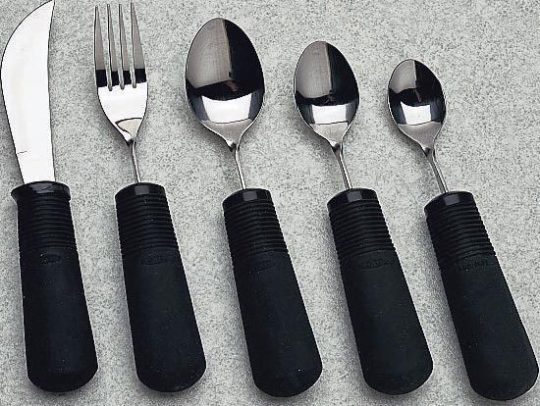
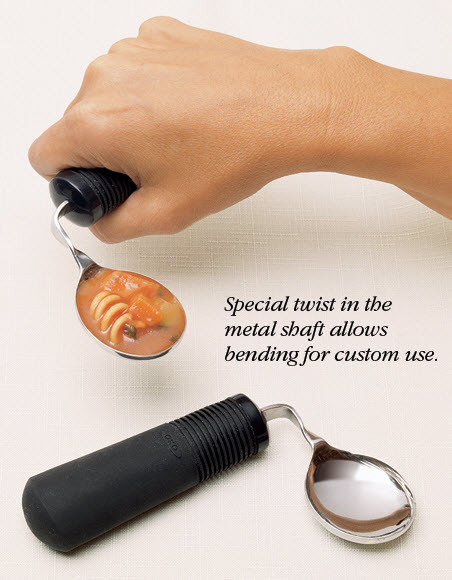
While I’m sure there are people too lazy to spin a fork, keep in mind people like this person who may be suffering from arthritis or a neurological disease or nerve damage or a thousand other conditions that might impair their ability to do things as simple as spin a fork to eat spaghetti.
These are used with people who can’t grip well:
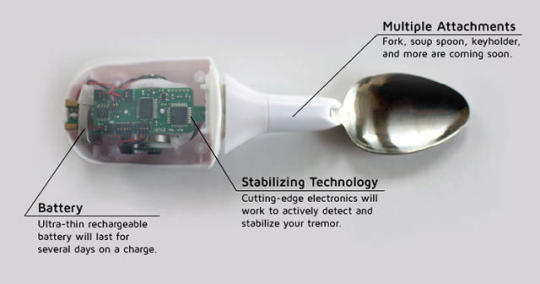
This is for Parkinsons’s:
For people who can’t even bend their joints:
Here’s a product that guides your hand from your plate to your mouth
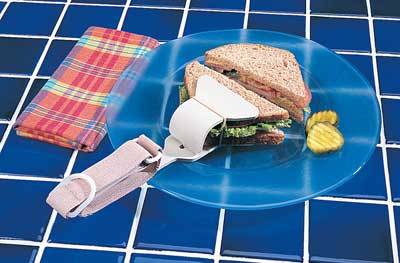
This one holds a sandwich
Like I get it. I used to see things like the fork and think “that’s fuckin’ lazy” or that product that holds a gallon and you just tip it and pour. But then I started working around the disabled and impaired and found out that these products aren’t meant for lazy people, they’re meant for people who need help.
So maybe next time you see something, instead of thinking “Wow, are people that lazy?” just be grateful that you’re able to do the things you do every day and take for granted, like being able to feed yourself and wipe your own ass because you have enough coordination and bendy joints to do it.
This isn’t specualtion either; the majority of products from commericals that we think are funny or silly are autally MEANT for hte disabled.But they are marketed towards the abled because the disabled aren’t considered a viable enough demographic on their own.
the Snuggie for example? Created for wheelchair users.
This is actually really nifty.
oh my god of course the snuggie was for wheelchair users
The fact that anyone buys these products besides disabled people drastically lowers the price of them. These would normally cost hundreds if not thousands if dollars. Because if spent time and money creating it, the company wants to get more than that back. And they can’t do that if they sell and market these primarily to disabled people for $20-$40 a piece or whatever. They’d lose money on production. If they can sell hundreds of them to everyone, they can lower the price drastically and therefore disabled people don’t die while trying to scrape up the money to buy these things and be a bit more independent.
I never considered that last part and that’s actually genius
There’s also something to be said about normalising these products socially by showing abled people using them and marketing to them. If a perfectly able-bodied person with no issues can be seen to use this stuff and, maybe, just be seen as a little silly, then it makes it a lot easier for people who actually legitimately Need to use them.
I used to think these products were silly until posts like this pointed out to me that they’re actually really useful and important for people who are disabled or have conditions that make doing things a lot of us take for granted difficult for them and now I’m just really glad that these products exist ❤
People who prefer hot weather: Snow and ice are a pain, and the cold is just kind of uncomfortable even when you wrap up, you know?
People who prefer cold weather: MY SKIN LITERALLY MELTS OFF EVERY SUMMER I AM A FUCKING HUMAN SOUP AS WE SPEAK
you wouldn’t believe how many people reblogged this to whine about hot weather in the tags.
too cold? put on another layer!
too hot? change into thinner clothes!
still too cold? put on another layer!
still too hot? uh, get naked I guess?
still too cold? put on another layer!
still too hot? Ţ̡̜̮̗̟̯͘ͅA̛͈͎̤͙̳̦̱̜̺̪K̢̻̥̥̥̪̙̜̩̗̼̤̻̻͖͍̜͈͉͠ͅE̟͕̩͔̪͓͔̥̦͇̣͇̳͕͉͜ͅ ̠̝̥̖̭̦̼́͝O̩̦͓̠͉̲̲̱̪̹̻̼̭̯͎͈̕͢F̷̸̢̛̙͇͔̜̙̮̗̲̤͇̯͡F̧̨̱̤̲̫͕͔̼̭͙̠̙͙̹̻ͅ ҉̫̠͓̙̠͔̕͜͠Y͡҉̴̘̭̬̳́O̶̶̧͚̞̣̯̩̫̜̩͉̤͎͖̖͟ͅU̶̵̺̠̪̘̱̮̮̙̻͈̣̦̭͠͝͞R̨҉̦̺͓̩̺͖̘̪̥̺͚̱͚͔̪͓̖̰ ̷̸̺͇̳͇̖̥̻̳͚̗̥͙̪̣́S̡̞̳͖̭̯͉̻̠͔̥̹̫̣̼̹͇͜K͏̧͍̪̗̖̜̫̙̱̫͈̟̝̮͈̻̺̯̟̠̀Į̧̙͙͔̠͖̟̕͝Ǹ͖͎̳͍̪̱̞͇̺̘̩͘͜͠
The cold is easily shut out, the heat is inescapable hell
THE TRUTH COMES OUT.
Avoidance techniques for the cold:
-more coats, fire, hot food and drink, stay inside, fuzzy sweaters, ear muffs, become a burrito
















 thisacelovesheadcanons