sorry if i’m being a party pooper but because rabies is apparently the new joke on here ??? please remember that rabies has an almost 100% fatality rate after symptoms develop so if you’re bitten or scratched by an animal that you aren’t 100% sure is vaccinated then GO TO A DOCTOR. it’s not a joke. really.
You’re being kind when you say “almost 100% fatality”. What people need to hear is: if you get to develop rabies symptoms, you’re dead. If you get heavy treatment after developping symptoms, you still need a miracle. Like, a real miracle, you should enter some religion if you escape that.
ALSO, I don’t want people feeling confident about petting stray/wild animals because there’s a vaccine available, either. I’ll explain why from my own experience (I’m not a doctor).
I got bitten by a wild tamarin once, on the pulp of my index finger. It drew blood, there are many wild animals in the area (tamarins, possums, bats, foxes) and it isn’t that uncommon to hear about 1 or 2 rabies cases every now and again (a puppy we gave to a friend got it, for instance), so I went to an ambulatory immediately.
Because I was bitten in an ultrasensitive area, I needed fast treatment. But it was also a small area, so the usual thing they do – inject the vaccine in the place – wasn’t a choice. They told me they’d divide the shot in 5 small ones, and inject me all over my body, so the antidote would get to my entire system fast.
Please stop for a moment and think that the disease is so worrysome that they’d rather needle me all over than to give me one shot and wait until it spread through my system.
Then they said that, okay, but there was a catch first. I needed to take an antiallergic shot. “Why?” “Because the virus is devastating, and as the vaccine is made from it, but weakened (like almost every vaccine) it will still create a reaction, and it’s a strong one, and it’s veru common for people to have strong allergic reactions to it.” YOU HAVE TO TAKE AN ANTIALLERGIC SHOT IN ORDER TO TAKE THE VACCINE COZ THE VACCINE COULD POTENTIALLY MAKE YOU REALLY SICK
ALSO IT WASN’T JUST “A LITTLE ANTIALLERGIC SHOT”
IT WAS ONE OF THESE FUCKERS HERE.
It was OBVIOUSLY dripped in my body and not injected because HAHAHAHA. Truth be told I was an adult already and I’m tall so I have a lot of mass but STILL.
So after I had taken the antiallegic and was starting to feel drowsy (as a side effect of it) the doctor came with the 5 shots.
– One in each buttock
– One in each thigh
– One in my left arm
They all stung like a bitch and I usually don’t care about shots.
“Okay so can I go home now?”
“No, we have to keep you under observation for 2h so we’re SURE the vaccine won’t give you any reaction.”
BINCH I WAS GIVEN A BUTTLOAD OF MEDICINE BUT THERE WAS STILL A RISK.
I slept through the two hours and then was liberated to go home. My legs, butt, and left arm hurt all over, like I had been punched there, for a few days. I also had a fever (not feverish, a fever)
BUT DID YOU THINK IT WAS OVER?
WRONG!!!
I had to take four reinforcement shots in the next month, one a week, so I could be positively be considered immunized.Every time I took a shot, my arm would swell and hurt like it’d been hit, and when night came I’d have a fever. Because that’s how fucking strong the vaccine is, BECAUSE THAT’S HOW VICIOUS THE VIRUS IS.
So yeah. DO NOT PUT YOURSELF IN RISK, GODDAMNIT. Rabies is a rare condition all over, THANK GOD, and 1 confirmed case can be already considered a surge and a reason for mass campaigning, AND FOR A REASON.
If you like messing with stray/wild animals, don’t go picking them up and be extra careful. Or just, like, DON’T – call a vet or an authority that can handle them safely.
I must add that I live in a country with universal healthcare, so I didn’t pay a single penny for my treatment. Is this your reality? If not, ONE MORE REASON TO NOT FUCKING PLAY WITH THIS SHIT.
Rabies is 100% lethal. Period. If you are scratched or bitten by an animal you’re not positive is vaccinated, you need to find treatment NOW. And probably go through all that shit I’ve been through (also if you are immunosupressed? I DON’T KNOW WHAT’D HAPPEN)
Stay safe and don’t be stupid ffs
Guys, I know this isn’t art nor anything like that, but I’ve been hearing about this rabies thing and ???? Look I trust none of you would risk yourselves like this, but maybe you can educate someone through my experience and stuff.
Also rabies does not necessarily cause frothing-at-the-mouth aggression in animals. Docility is also a very common symptom so any wild animal that is ‘friendly’ or ‘likes to be pet’ is suspect. Literally any wild animal is a vector.
Finally, you don’t need to be bitten. All you need is to come into contact with an infected animal’s bodily fluids through a cut that maybe you didn’t notice when you were handling it when it drooled on you.
Never touch a wild animal.
Infection with the rabies virus progresses through three distinct stages.
Prodromal: Stage One. Marked by altered behavioral patterns. “Docility” and “likes to be pet” are very common in the prodromal stage. Usually lasts 1-3 days. An animal in this stage carries virus bodies in its saliva and is infectious.
Excitative: Stage Two. Also called “furious” rabies. This is what everyone thinks rabies is–hyperreacting to stimuli and biting everything. Excessive salivation occurs. Animals in this stage also exhibit hydrophobia or the fear of water; they cannot drink (swallowing causes painful spasms of the throat muscles), and will panic if shown water. Usually lasts 3-4 days before rapidly progressing into the next stage.
Paralytic: Stage Three. Also called “dumb” rabies. As the infection runs its course, the virus starts degrading the nervous system. Limbs begin to fail; animals in this stage will often limp or drag their haunches behind them. If the animal has survived all this way, death will usually come through respiratory arrest: Their diaphragm becomes paralyzed and they stop breathing.
And to add onto the above, saliva isn’t the only infectious fluid. Brain matter is, too. If, somehow, you find yourself in possession of a firearm and faced with a rabid animal, do not go for a head shot. If you do, you will aerosolize the brain matter and effectively create a cloud of infectious material. Breathe it in, and you’ll give yourself an infection.
When I worked in wildlife rehabilitation, I actually did see a rabid animal in person, and it remains one of the most terrifying experiences of my life, because I was literally looking death in the eyes.
A pair of well-intentioned women brought us a raccoon that they thought had been hit by a car. They had found it on the side of the road, dragging its hind legs. They managed–somehow–to get it into a cat carrier and brought it to us.
As they brought it in, I remember how eerily silent it was. Normal raccoons chatter almost constantly. They fidget. They bump around. They purr and mumble and make little grabby-hands at everything. Even when they’re in pain, and especially when they’re stressed. But this one wasn’t moving around inside the carrier, and it wasn’t making a sound.
The clinic director also noticed this, and he asked in a calm but urgent voice for the women to hand the carrier to him. He took it to the exam room and set it on the table while they filled out some forms in the next room. I took a step towards the carrier, to look at our new patient, and without turning around, he told me, “Go to the other side of the room, and stay there.”
He took a small penlight out of the drawer and shone it briefly into the carrier, then sighed. “Bear, if you want to come look at this, you can put on a mask,” he said. “It’s really pretty neat, but I know you’re not vaccinated and I don’t want to take any chances.”
And at that point, I knew exactly what we were dealing with, and I knew that this would be the closest I had ever been to certain death. So I grabbed a respirator from the table and put it on, and held my breath for good measure as I approached the table. The clinic director pointed where I should stand, well back from the carrier door. He shone the light inside again, and I saw two brilliant flashes of emerald green–the most vivid, unnatural eyeshine I had ever seen.
“I don’t know why it does it,” the director murmured, “but it turns their eyes green.”
“What does?” one of the women asked, with uncanny, unintentionally dramatic timing, as she poked her head around the corner.
“Rabies,” the director said. “The raccoon is rabid. Did it bite either of you, or even lick you?” They told us no, said they had even used leather garden gloves when they herded it into the carrier. He told them to throw away the gloves as soon as possible, and steam-clean the upholstery in their car. They asked how they should clean the cat carrier; they wanted it back and couldn’t be convinced otherwise, so he told them to soak it in just barely diluted bleach.
But before we could give them the carrier back, we had to remove the raccoon. The rabid raccoon.
The clinic director readied a syringe with tranquilizers and attached it to the end of a short pole. I don’t remember how it was rigged exactly–whether he had a way to push down the plunger or if the needle would inject with pressure–but all he would have to do was stick the animal to inject it. And so, after sending me and the women back to the other side of the room, he made his fist jab.
He missed the raccoon.
The sound that that animal made on being brushed by the pole can only be described as a roar. It was throaty and ragged and ungodly loud. It was not a sound that a raccoon should ever make. I’m convinced it was a sound that a raccoon physically could not make.
It thrashed inside the carrier, sending it tipping from side to side. Its claws clattered against the walls. It bellowed that throaty, rasping sound again. It was absolutely frenzied, and I was genuinely scared that it would break loose from inside those plastic walls.
Somehow, the clinic director kept his calm, and as the raccoon jolted around inside the cat carrier, he moved in with the syringe again, and this time, he hit it. He emptied the syringe into its body and withdrew the pole.
And then we waited.
We waited for those awful screams, that horrible thrashing, to die down. As we did, the director loaded up another syringe with even more tranquilizer, and as the raccoon dropped off into unconsciousness, he stuck it a second time with the heavier dose. Even then, it growled at him and flailed a paw against the wall.
More waiting, this time to make sure the animal was truly down for the count.
Then, while wearing welder’s gloves, the director opened the door of the carrier and removed the raccoon. She was limp, bedraggled, and utterly emaciated, but she was still alive. We bagged up the cat carrier and gave it to the women again, advising them that now was a good time to leave. They heeded our warning.
I asked if I could come closer to see, and the clinic director pointed where I could stand. I pushed the mask up against my face and tried to breathe as little as possible.
He and his co-director–who I think he was grooming to be his successor, but the clinic actually went under later that year–examined the raccoon together. Donning a pair of nitrile gloves, he reached down and pulled up a handful, a literal fistful, of the raccoon’s skin and released it. It stayed pulled up.
Severe dehydration causes a phenomenon called “skin tenting”. The skin loses its elasticity somewhat, and will be slow to return to its “normal” shape when manipulated. The clinic director estimated that it had been at least four or five days since the raccoon had had anything to eat or drink.
She was already on death’s doorstep, but her rabies infection had driven her exhausted body to scream and lunge and bite.
Because, the scariest thing about rabies (if you ask me) is the way that it alters the behavior of those it infects to increase chances of spreading.
The prodromal stage? Nocturnal animals become diurnal–allowing them to potentially infect most hosts than if they remained nocturnal.
The excitative stage? The infected animal bites at the slightest provocation. Swallowing causes painful spasms, so they drool, coating their bodies in infectious matter. A drink could wash away the virus-charged saliva from their mouth and bodies, so the virus drives them to panic at the sight of water.
(The paralytic stage? By that point, the animal has probably spread its infection to new hosts, so the virus has no need for it any longer.)
Rabies is deadly. Rabies is dangerous. In all of recorded history, one person survived an infection after she became symptomatic, and so far we haven’t been able to replicate that success. The Milwaukee Protocol hasn’t saved anyone else. Just one person. And even then, she still had to struggle to gain back control of her body after all that nerve damage.
Please, please, take rabies seriously.
This has been a warning from your old pal Bear.
I knew how bad it was, but I had never read anything like the raccoon story.
I am not exaggerating when I say that is literally terrifying.
Y’all please read this. That is absolutely hideous. That’s literally like something from a horror movie.
Do not fuck around with wildlife. Or weird strays.
World’s Smallest Cat: Rusty Spotted Cat | “He may look like a kitten, he’d still fit in the palm of your hand – but this little male is very nearly fully grown. [..] What he lacks in size… he makes up for in daring.”
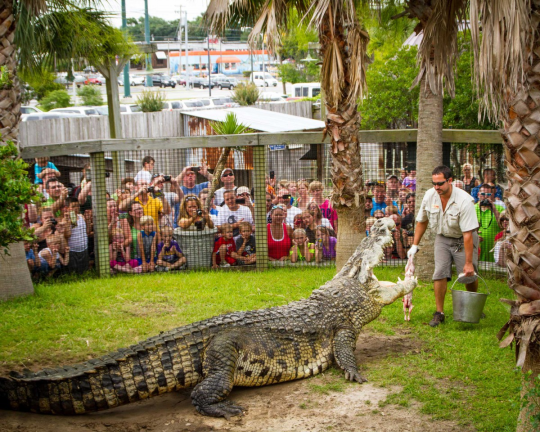
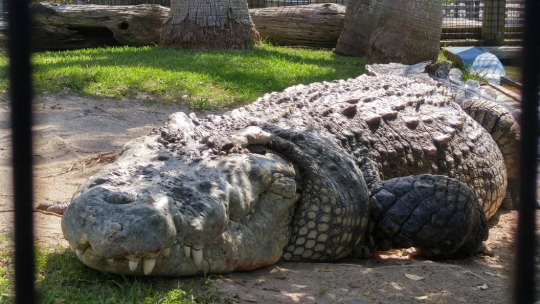
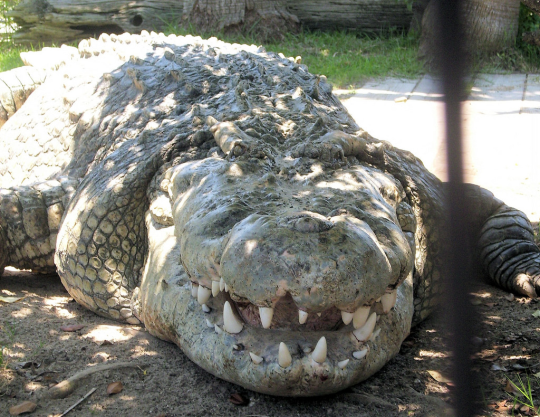
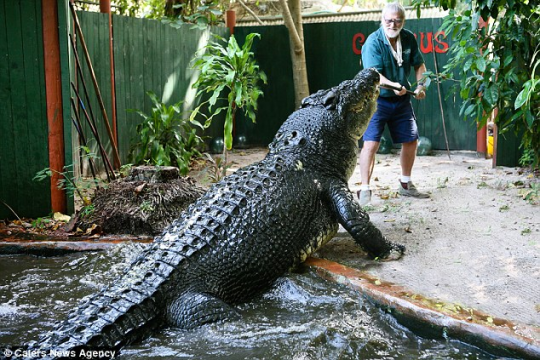
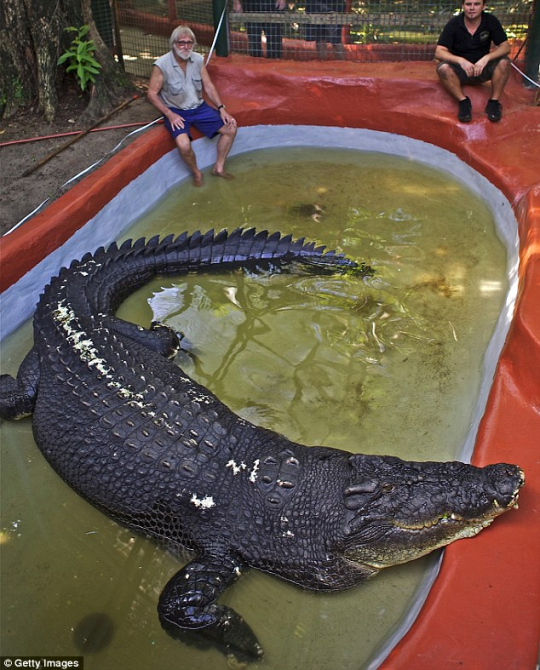
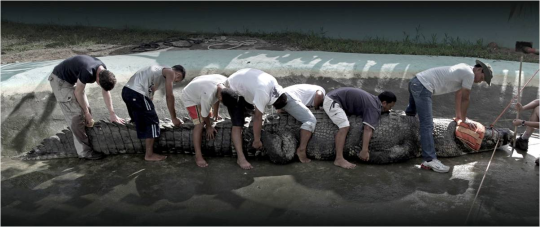
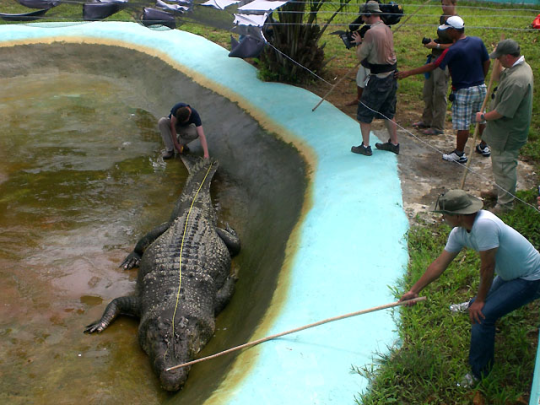
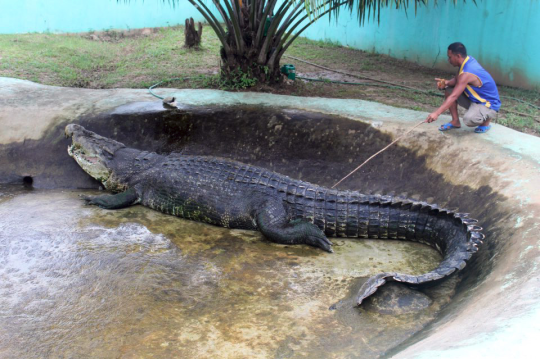
I can’t stop thinking about crocodiles for some reason so here’s some cool pictures I found of probably the second largest one in captivity, his name is Utan:
isn’t he beautiful
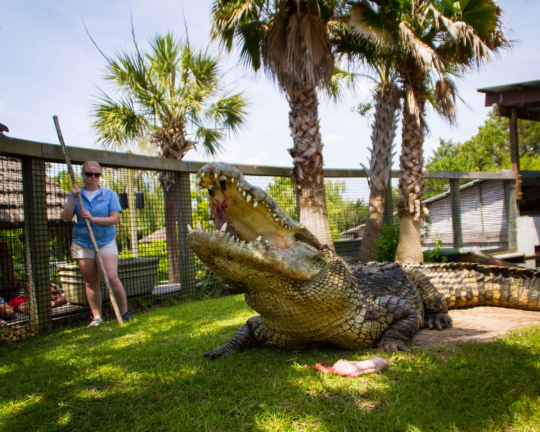
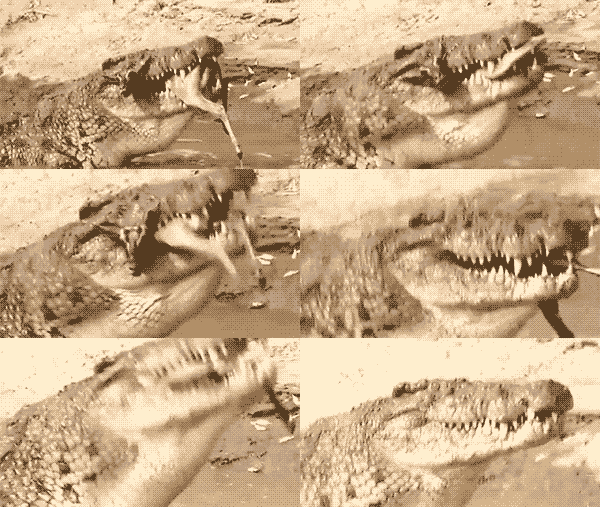
listen to the SOUND when he bites
and that’s not even a real power bite, that’s mostly just heavy bone falling on heavy bone from his jaws and the air rushing out from between them
2000 pounds of Good Boy
you get me
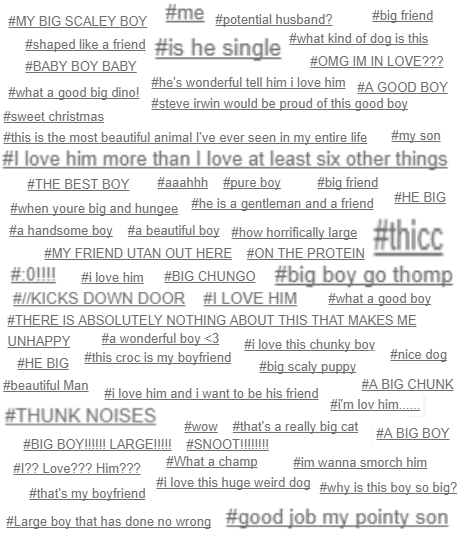
I honestly expected like 5 notes, what HAPPENED here
More tags on this ridiculous post:
Wait, thats the 2nd biggest crocodile? Then what does the biggest one look like?
That would be Cassius, a very old Saltwater crocodile who is estimated to be around 114 years old and lives at Marineland Melanesia in Green Island, Australia. His official measurement is 5.48 meters, which makes him the largest in captivity currently. Because Utan is only slightly smaller and much younger, (only in his 50s), he will likely break Cassius’ record eventually. But for now, Cassius holds the title:
He is NOT, however, either the largest crocodile ever captured in Australia OR the largest ever in captivity.
A slightly larger crocodile has been reported (though not yet comfirmed) to have been captured at 5.58 meters.
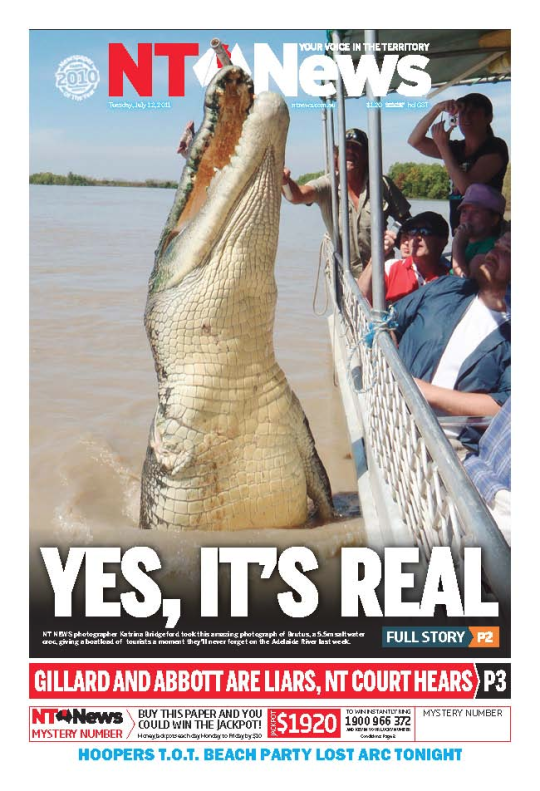
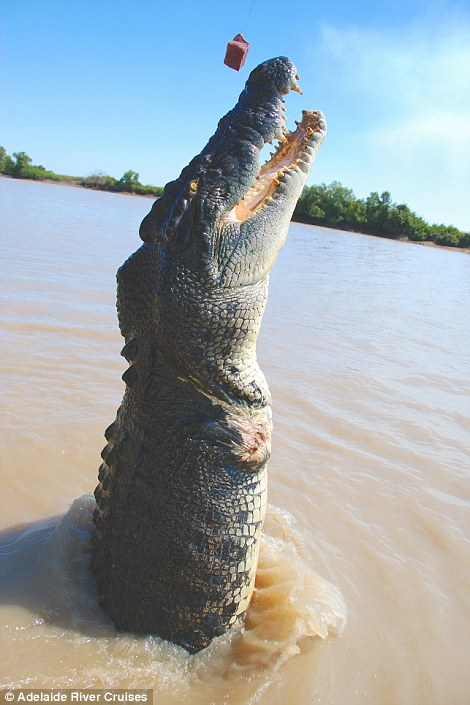
And while the famous Brutus of the Adelaide River was estimated to be just slightly larger than Cassius at 5.5m, he was driven out of his territory by a younger and even larger crocodile, who as a result has been given the name, The Dominator. He is estimated to be just over 6m.
This is Brutus, with an appropriate caption:
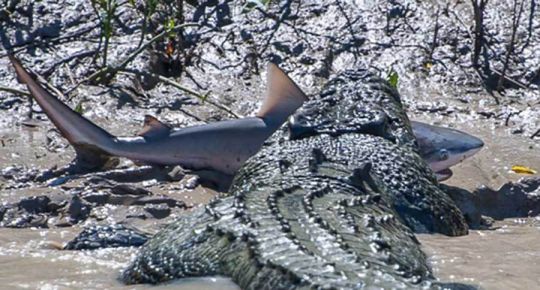
It is believed that he lost that arm in a fight with a Bull Shark.
The Bull Shark lost.
THIS is the crocodile who kicked him out. The Dominator:
And that’s STILL not the biggest.
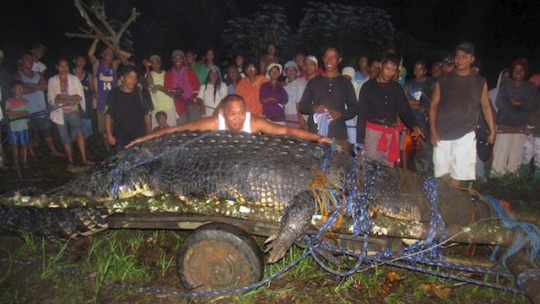
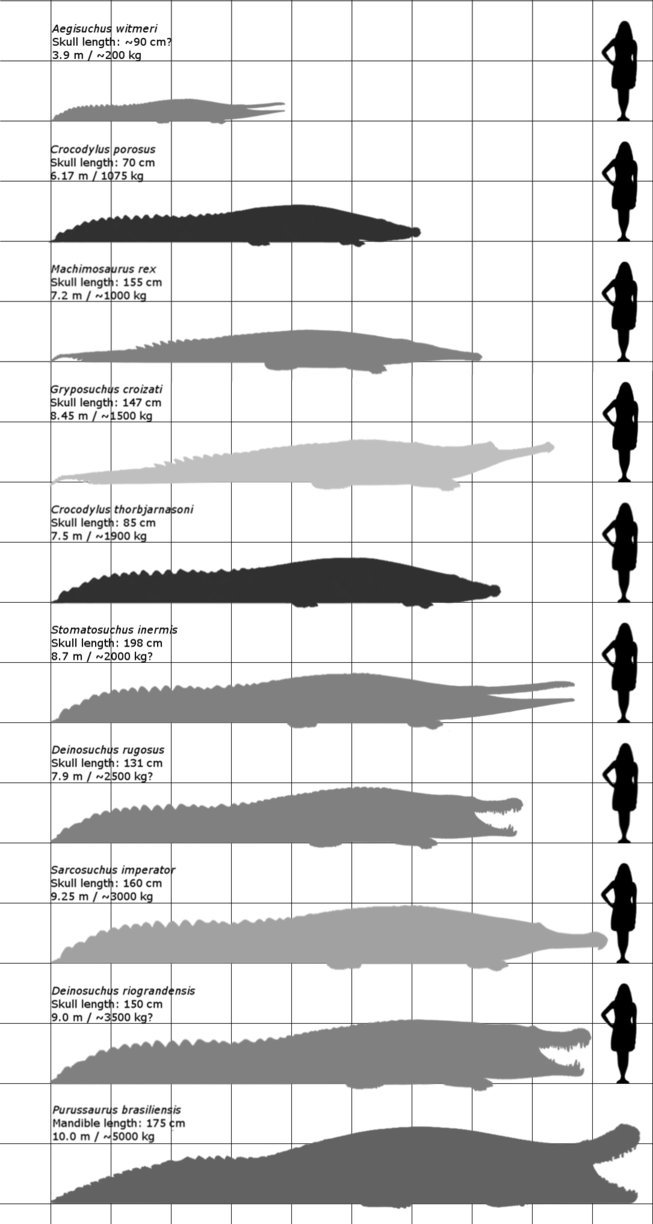
The largest living crocodile ever reliably measured was Lolong, who for the 1.5 years between his capture and his death was the largest crocodile ever held in captivity, at a whopping 6.17 meters (20 feet 3 inches) and 1075 kg (2,370 lbs). He had been feeding on both humans and very large livestock in the Bunawan creek in Agusan del Sur in the Philippines. It took 100 people all night to drag him to shore during his capture.
And here’s why:
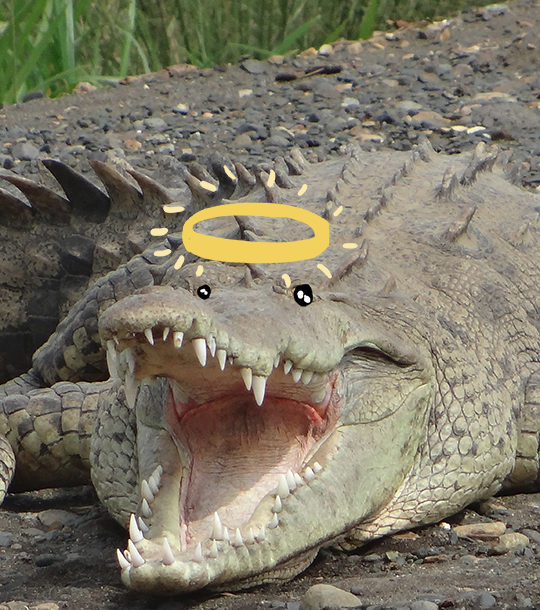
Also, to prevent credit from getting buried on a separate reblog, I have been informed that the above image of the crocodile with the cartoon eyes and halo was made by @rashkah! (And it is wonderful and I would like to thank him for its existence, because it perfectly captures my feelings about terrifying giant primordial reptiles.)
As far as Brutus is concerned I was led to believe that he lost that arm when relatively young.
Since then Brutus developed a habit of hunting and eating Bull Sharks.
Here’s him with a prey.
And if you thought that you’ll be safe if you just stay out of Australia then think again!
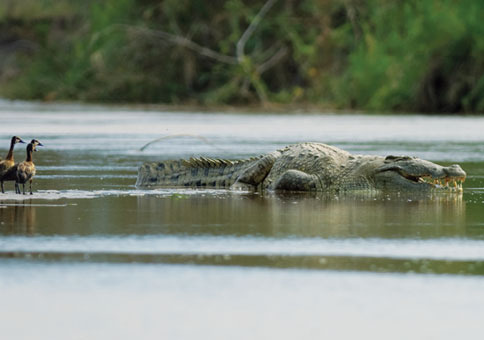
Meet Gustave the Nile Croc.
This crocodile became almost legendary for both it’s size and the habit of hunting both livestock AND humans.
So how big is Gustave?
No one is sure. Since he was NEVER captured.
His estimated size is of at least 5,5m but some give him over 6m.
The terrifying parts are:
1) He is still growing having only about 60 years.
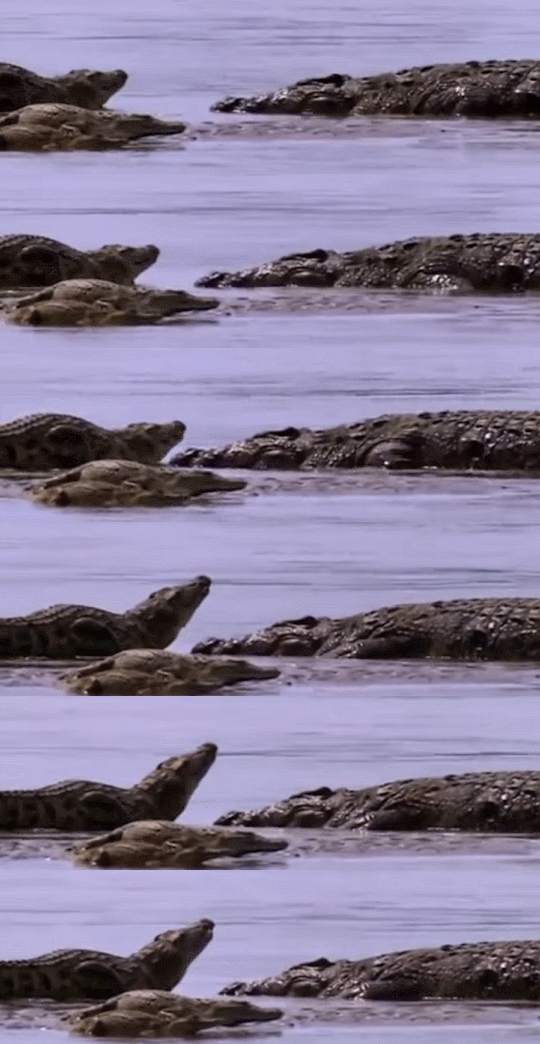
2) Adult crocodiles often perform a gesture of submission to him – something usually done by young crocodiles toward adults – Gustave is just THAT BIG.
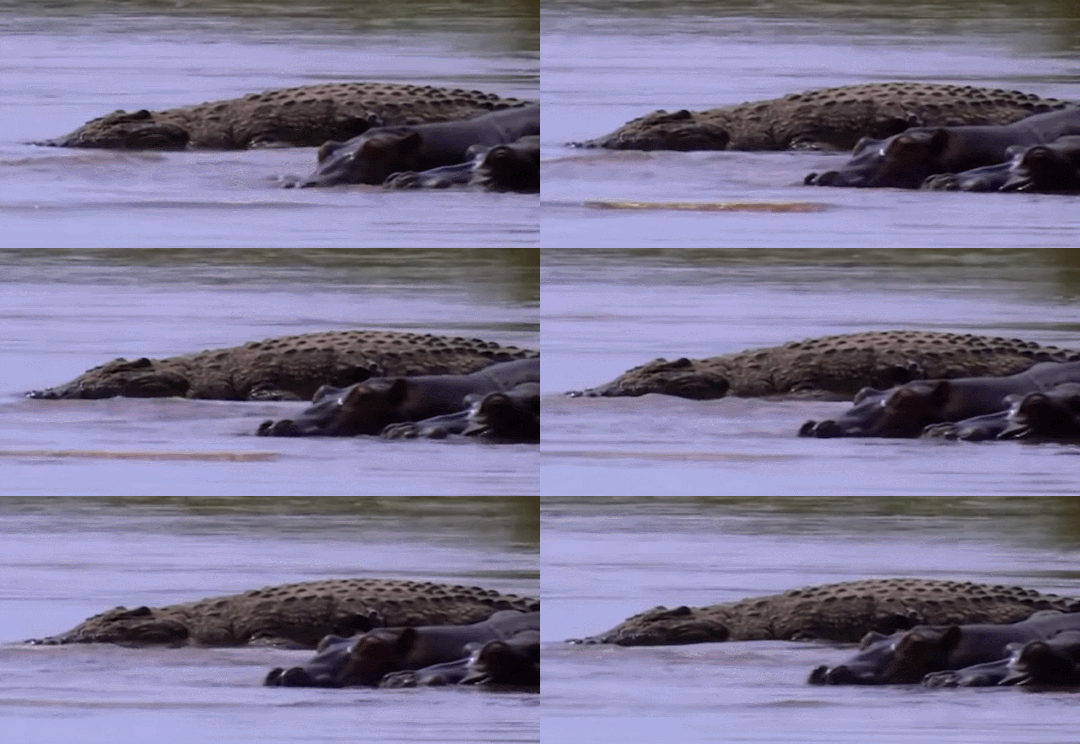
3) His sheer size makes it difficult for him to catch agile prey Nile crocs tend to feed on – hence why he developed a habit of hunting either larger prey like Hippopotamus or creatures which are not good at spotting danger in the first place like livestock and humans.
And this is NOT ALL.
Gustave actually has a noticeable scars on his body – he was shot at east 3 times and stabbed with a spear or something similar at one occasion.
He lived to tell the tale – my question is:
What happened to that one dude who attacked Gustave with a spear?
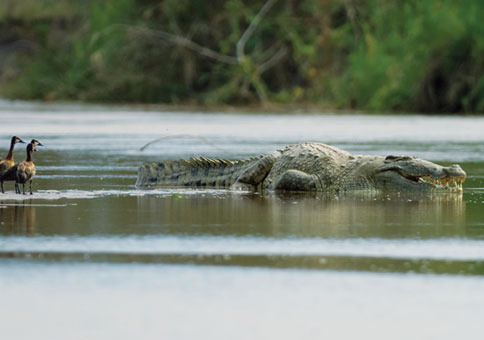
*Crocodile Dundee voice* Mate, that’s not Gustave:
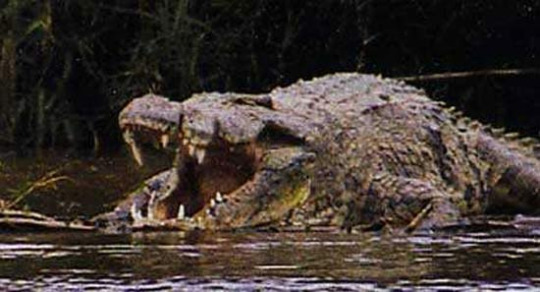
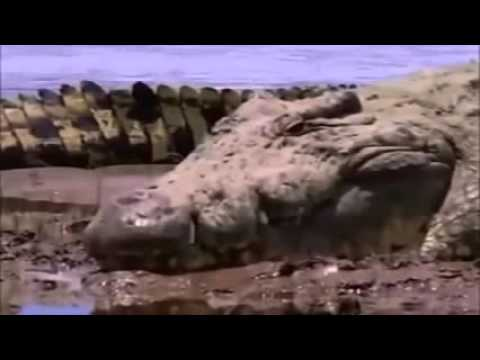
THIS is Gustave:
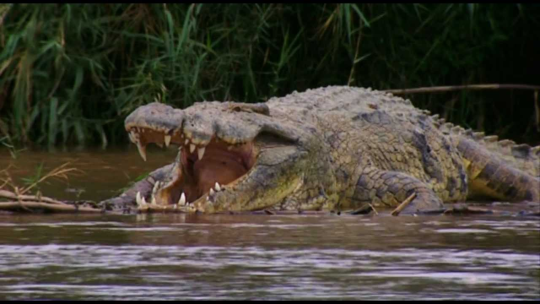
And he is the PERFECT CROCODILE. He is the perfect example of what I mean when I talk about (as I do) how the morphology of extremely large crocodiles adapts to the changing physics of their bite.
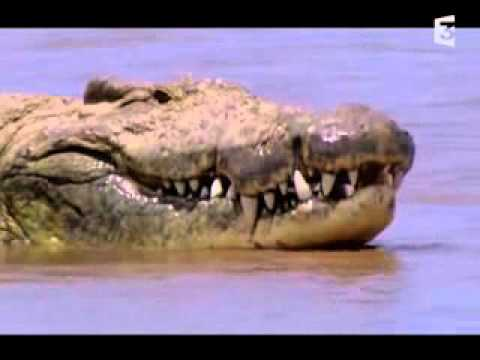
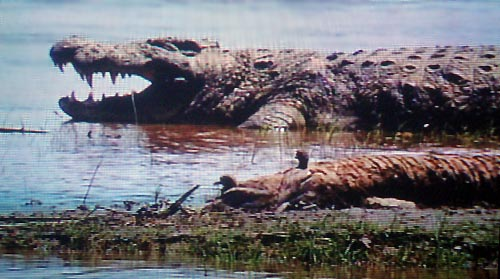
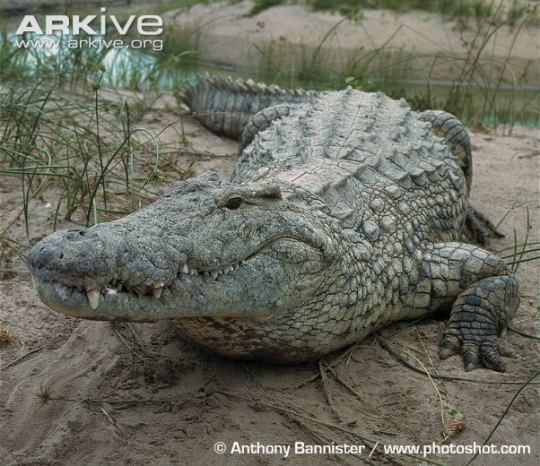
This is a typical adult Nile Crocodile:
And THIS is a god among his kind:
This is it, folks. The Final Form. THIS is what peak performance looks like.
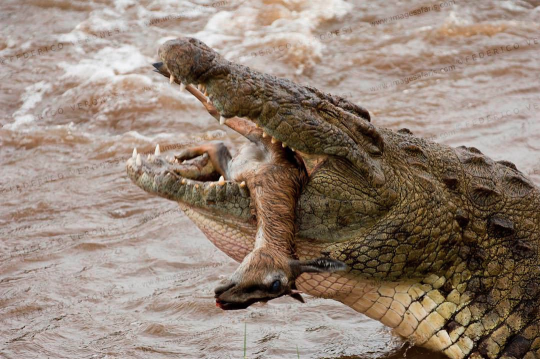
Crocodiles and physics have an interesting relationship. Crocodiles have, by a CONSIDERABLE MARGIN, the strongest bite of any animal on Earth. EVER. Scaled up estimates (based on Nile and Saltwater crocodiles) give the extinct Deinosuchus an estimated bite force MORE THAN DOUBLE the recently updated Tyrannosaurus bite estimates. Living crocodiles have bite forces measured in the range of 5000 pounds per square inch, for an individual around 15-16 feet. It is estimated that modern crocodiles in the range of 18-20 feet would have bit forces around 7-8000 psi or more.
That’s a problem.
Because a crocodile’s skull is only designed to handle so much pressure. Go beyond that limit and the force of impact when those jaws snap shut could literally shatter their own skulls.
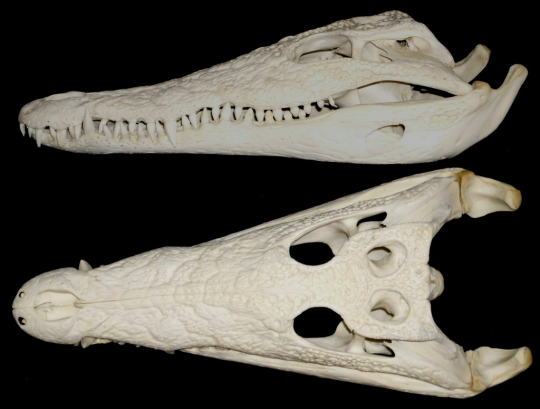
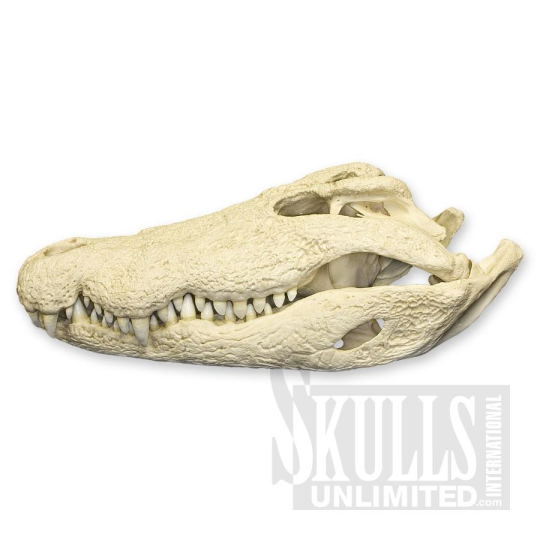
But evolution has spent hundreds of millions of years perfecting crocodiles, so PHYSICS ISN’T GOING TO STOP THEM. What ends up happening in the skulls of these extremely large crocodiles is they will increase dramatically in mass to compensate for the increased forces. A crocodile’s skull is almost exclusively solid bone, with only minimal space for nasal passages, a surprisingly advanced brain, and some slightly porous looking framework that helps the bone distribute the force over a larger area. The effect is by far the most pronounced in Nile crocodiles, which most regularly feed on larger prey and need to make use of all that power.
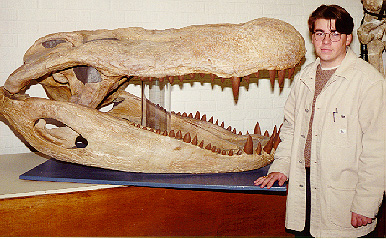
Compare, 26 inch skull:
vs 29 inch skull:
Both of those are Nile crocodile skulls (or rather, replicas thereof).
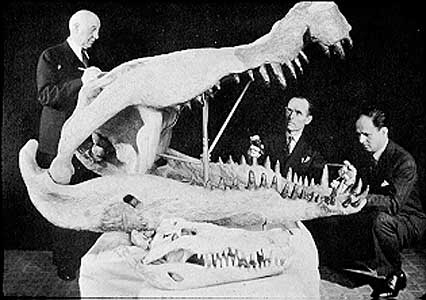
And just for fun, here are the skulls of completely different (and very extinct species), Deinosuchus:
and Purussaurus:
The bigger the crocodile (within a given species), the more massive the skull needs to be to compensate for that UNBELIEVABLE bit pressure. This is one way to see from a distance whether you are looking at a normal sized crocodile:
and a truly extraordinary individual:
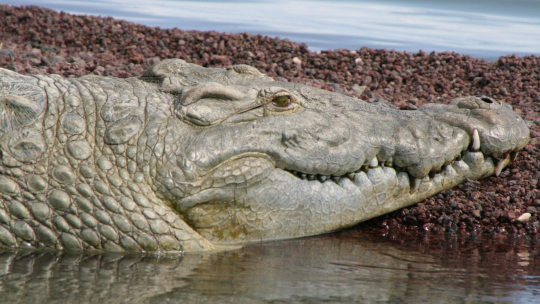
One of the things about Gustave that’s so impressive is how healthy his teeth look. A lot of large crocodiles, in their old age, have very worn down and often missing teeth. They do replace them many times over a lifetime, but when they get very old this slows down. Gustave, at least in every picture taken of him, had teeth that were in very good condition.
Even crocodiles much smaller than Gustave’s reported size (probably similar in size to Dominator or Lolong) tend to have smaller or more worn teeth:
than the pinnacle of his kind:
Lolong! It means Gramps or Grandpa, because he’s a relic of an ancient world where crocs more massive than he was walked the earth. His body is on display somewhere right now though I forgot where.
Every time I see this post there’s more crocodiles. It’s the gift that keeps on giving.
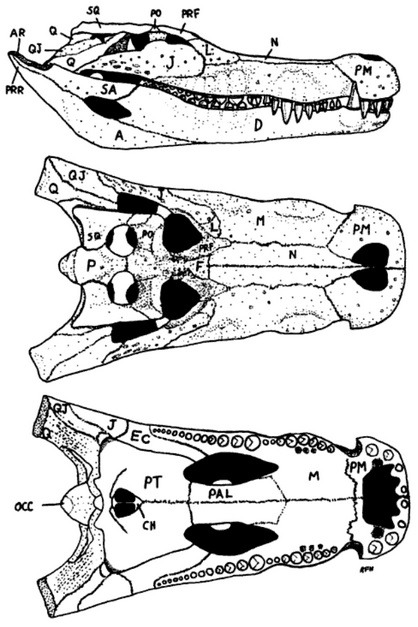
That above image of the Deinosuchus skull is outdated. It was an early estimate of what the skull might have looked like based on scant fossil remains (if you look closely, you’ll see parts of the skull that are darker than the rest. That’s the real bone, the rest is a plaster reconstruction) and a poor understanding of the animal’s evolutionary relationships (that skull is based on the Cuban Crocodile, whereas Deinosuchus was more closely related to alligators).
Many years and a lot of better fossil material later, this is a better example of a Deinosuchus skull, specifically D. rugosus (from Schwimmer, 2002)
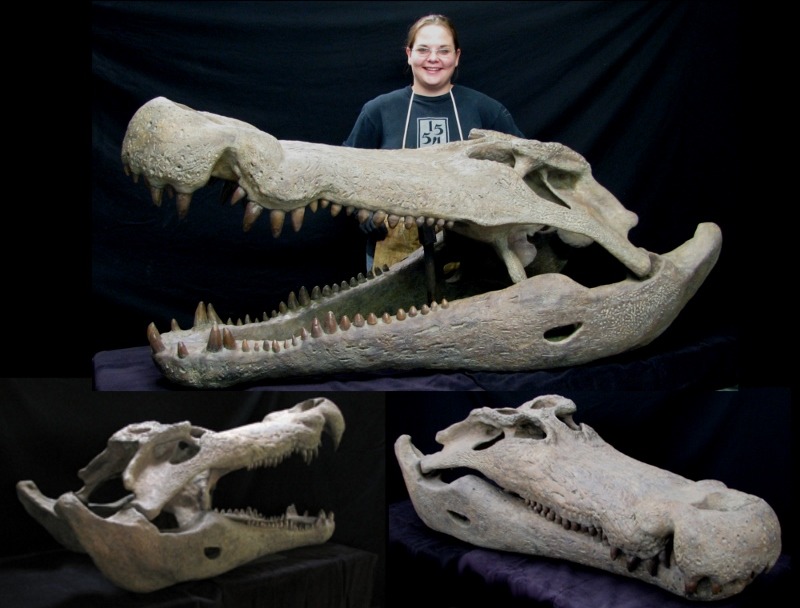
And a more generic, non-species-specific Deinosuchus skull for scale, courtesy of Gaston Design:
(You know you can buy this from them? I mean it’s crazy expensive, of course, but still!)
Also, to dispel any potential rumours, according to palaeontologist Mark Witton, common length estimates of 10 metres for D. rugosus are inaccurate, with a more likely size being no more than 8 metres, which is still FUCKING big. However! There is a second, if much rarer species, Deinosuchus riograndensis, which could have reached 9 metres, and that would have been a sight to behold. Also, the common rumour that Deinosuchus preyed on dinosaurs is not… entirely true. There is evidence that it occasionally ate dinosaurs (though whether that was through active predation or scavenging is unknown), there is far more evidence to suggest it mainly hunted sea turtles, given that many fossils of Cretaceous turtles have been found with Deinosuchus-like bite marks, not to mention that Deinosuchus’s exceptional bite force is far more suited to getting through the bony shells of turtles than the hollow, relatively delicate bones of dinosaurs, which would not require such… excess.
One more thing, Deinosuchus riograndensis, in all its 9-metre glory, is not the largest known crocodilian. That title belongs to the aforementioned giant caiman, Purussaurus brasiliensis, at 10 goddamn metres long.
(Credit to randomdinos over at DeviantArt for this one)



















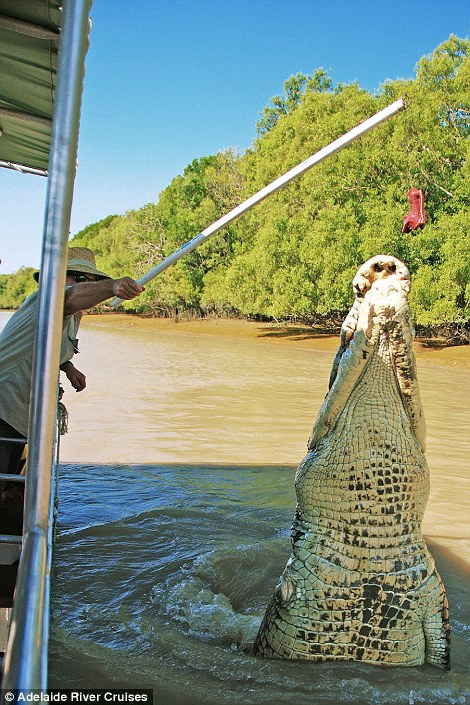
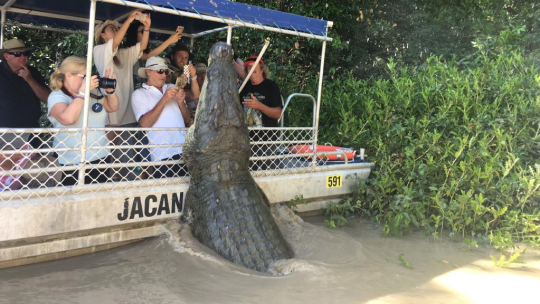
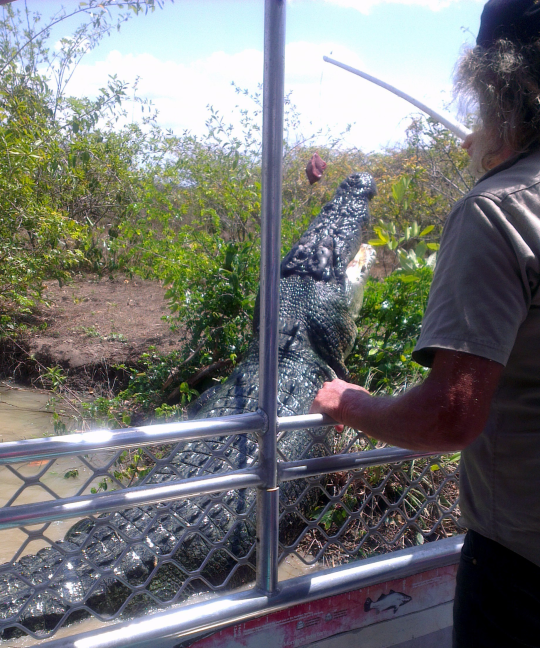
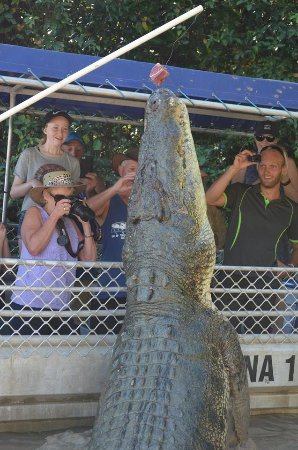


 thisacelovesheadcanons