
SNEAK CUDDLES
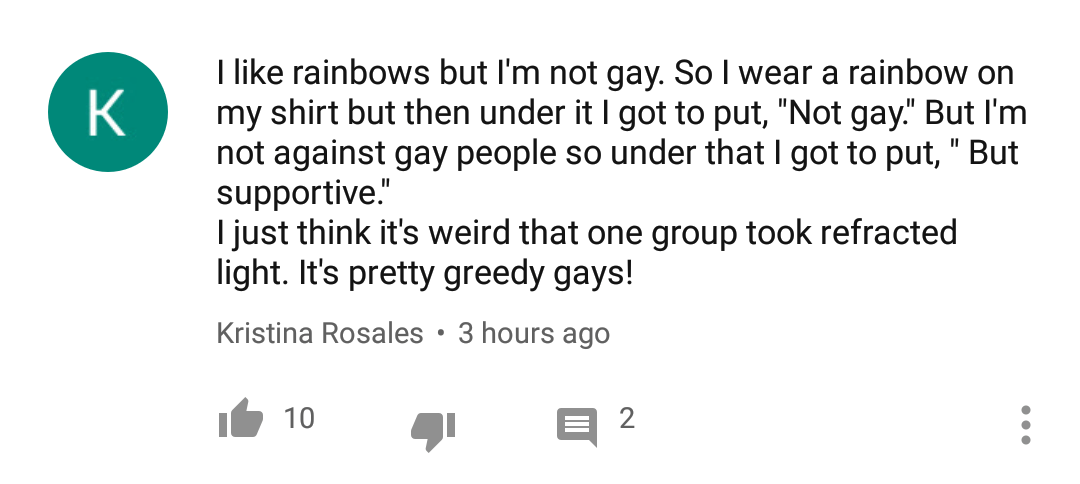
the straights are at it again
Reblog if you are a greedy gay hoarding refracted light all for your greedy gay self
I totally am, but also: I have a story. The time: 1995. The place: a small liberal arts college. We decided to participate in “denim day” which was a widespread event wherein on National Coming Out Day, you would wear denim to indicate SUPPORT FOR the LGBT community. Our support group made posters that were very, very clear about this. Wearing denim did not mean that you were coming out, it meant you supported anyone around you who might.
I have never seen so many suits and khakis IN MY LIFE. People who accidentally wore jeans went home and changed.
The community took it as a rebuke. We drew in closer to eachother, and felt unwelcome everywhere we thought we had friends before.
And I had people later tell me “You know I support you, just… I didn’t want anyone to think I was.” First off, I DON’T know you support me. Not if you refuse to, for one day, change nothing about your life to show it. Second off… why is that such a terrifying thought to you?
I remember before rainbows were a “gay thing”. They were everywhere. Church walls next to arks. School walls next to sunshine faces. People have VOLUNTARILY abandoned every other use. I have HEARD PEOPLE SAY they just couldn’t use rainbows anymore because people would think of “gay stuff.”
So I know this is a joke, and a stolen one at that, but you’ve done this to yourselves. If someone is so terrified of being perceived as queer that they will INSTANTLY abandon something they like if it has queer germs on it now or something, then they don’t deserve refracted light.
Maybe help us change the world into a place where being mistaken for queer would be just a thing to chuckle about and you can have refracted light back.
The LGBTQ+ community didn’t steal the rainbow. The straights abandoned it.

Apparently my One Fear shirt post rubbed some people the wrong way. Oh well.
Here’s my stance on the meme: I don’t give a shit; that bell’s never getting unrung. People still use that meme format three entire years later, I’m not expecting it to go anywhere anytime soon. Sometimes they credit me and that’s nice but usually they don’t and who fucking cares?
The thing I do hate is when people make money off of it. That objectively sucks. I never see any of that money. I’ve filed so many DMCA notices and it works maybe 20% of the time. Fuck RedBubble in particular. That’s why I put up the shirts on my store: https://www.teepublic.com/t-shirt/1711278-one-fear?product_id=315
Anyway, long story short: I don’t give a shit about memes because I’m not 14 but I do care deeply about money so everybody has to buy my shirt or I’ll sue you.
Looks like this essay was needed, so I went ahead and did it. Not sure I said everything I wanted to say, but I tried.
So, there’s this girl. She’s tragically orphaned and richer than anyone on the planet. Every guy she meets falls in love with her, but in between torrid romances she rejects them all because she dedicated to what is Pure and Good. She has genius level intellect, Olympic-athelete level athletic ability and incredible good looks. She is consumed by terrible angst, but this only makes guys want her more. She has no superhuman abilities, yet she is more competent than her superhuman friends and defeats superhumans with ease. She has unshakably loyal friends and allies, despite the fact she treats them pretty badly. They fear and respect her, and defer to her orders. Everyone is obsessed with her, even her enemies are attracted to her. She can plan ahead for anything and she’s generally right with any conclusion she makes. People who defy her are inevitably wrong.
God, what a Mary Sue.
I just described Batman.
Wish fulfillment characters have been around since the beginning of time. The good guys tend to win, get the girl and have everything fall into place for them. It’s only when women started doing it that it became a problem.
TV Tropes on the origin of Mary Sue:
The prototypical Mary Sue is an original female character in a fanfic who obviously serves as an idealized version of the author mainly for the purpose of Wish Fulfillment.
Notice the strange emphasis on female here. TV Tropes goes on to say that is took a long time for the male counterpart “Marty Stu” to be used. “Most fanfic writers are girls” is given as the reason. So when women dominate a genre, that means people are on close watch, ready to scorn any wish fulfillment they may engage in. This term could only originate if the default was female.
In fact, one of the CONTROVERSIES listed on the TV Tropes page is if a male sue is even possible. That’s right, it’s impossible to have an idealized male character. Men are already the ideal.
In our culture, male tends to be the default. Women take on the distaff parts. “Him” and “mankind” are what humanity are, “her” and “womankind” are secondary. Yet this isn’t true for Mary Sue as a term. That name was created first. It was a Star Trek fic that coined it and the female designation was likely a big reason it caught on. Thus, a female name is the default to use when describing idealized characters. Marty Stu and Gary Stu are only to be used if you’re discussing men specifically. Heck, there isn’t even an agreed upon term for them. So the only time female can be default is when discussing a badly written character, someone who is more powerful or important or liked than they should be allowed to be, someone the plot focuses on more than you would like, someone you don’t want to read about. Hmmm.
What’s really wrong with a thirteen year old girl having a power fantasy, even if it’s badly written? Who is it hurting? Men have baldly admitted to writing power fantasies and self inserts since the beginning of time. How many nerdy, schlubby guys suddenly become badasses and have hot girls chasing after them in fiction? See: Spiderman- blatant everyman who happens to stumble across amazing powers and catch the eye of a supermodel. Mary Sue is considered the worst insult to throw at a character as it renders them worthless. But since when are idealized characters automatically worthless? Aren’t all heroes idealized in some way? Don’t all heroes represent the author in some way? Aren’t these characters supposed to be people we look up to, people who represent human potential, the goodness that we strive for? Fantasy by nature is idealized, even the tragic ones.
If you look at the TV Tropes page for Mary Sue, it’s ridiculous. You can be a sue for having too many flaws, or not enough, for fixing things or messing things up, for being a hero or a villain. And of course, this is specifically pointed out as a trope related to the Princess and Magical Girl genres- genres aimed towards women are naturally full of Mary Sues. Magical girls are powerful and heroic and actually flaunt femininity as a good thing. They are a power fantasy designed for girls. So of course, a girl using traditionally feminine traits to dominate and triumph means she’s a sickeningly pure Mary Sue who makes everything go their way. Feminine traits are disdained and look down on, so when the positive feminine traits are prominent, the reader has an aversive reaction. How can a character be so feminine and triumph? She must be unrealistic, she must be badly written, because everyone knows it is impossible to be feminine and powerful.
Let’s look at what kinds of Mary Sues people will point to. People will claim a female character is a Mary Sue if she is a love interest. Put a female character within a foot of a male character, and people will scream “Mary Sue!” Why does someone falling in love with her make her a Mary Sue? Well, she hasn’t “earned” this awesome dude character’s love. What has she done to show she’s worthy of him? Fans miss the irony that this line of logic makes the male character seem more like the Sue in Question, as he’s apparently so perfect one has work for his coveted love and praise.
The idea that woman has to “earn” any power, praise, love, or plot prominence is central to Mary Sue. Men do not have to do this, they are naturally assumed to be powerful, central and loveable. That’s why it’s the first thing thrown at a female character- what has she done to be given the same consideration as a male character? Why is she suddenly usurping a male role? “Mary Sue” is the easiest way to dismiss a character. It sounds bad to say “I don’t like this female character. I don’t like that this woman is powerful. I don’t like it when the plot focuses on her. I don’t like that a character I like has affections for her.” But “Mary Sue” is a way to say these things without really saying them. It gives you legitimacy.
If a character is badly written, there’s generally something much more problematic than idealization going on. The plot will be dull and the character will perpetuate harmful stereotypes while other characters act oddly. For instance, Bella Swan is one of the only characters I’d even begin to classify as a Mary Sue, yet it’s not really her supposed Mary Sue traits that bother me. I don’t mind that she gets what she wants and everyone loves her, that she’s Meyer’s power fantasy. What I actually mind is that Stephenie Meyer has her perpetuate harmful anti-woman stereotypes- women need to be protected, women are shallow, women’s worth rests in desirability. That’s what’s actually harmful about her and worth discussing. I would criticize that rather than even get to the fact Bella got to be “too perfect and powerful”- that’s just a tiny, insignificant thing not worth mentioning in a huge pile of problems.
And that’s why I don’t call characters Mary Sue anymore. There’s really nothing bad about a power fantasy or wish fulfillment. It’s what’s fiction’s about. If one of my characters is called a Sue, I’ll proudly say “yep”, because that must mean that she broke out of that box a female character is supposed to be in. So I’ll go and say it: I love me some Mary Sues.
The idea that woman has to “earn” any power, praise, love, or plot prominence is central to Mary Sue. Men do not have to do this, they are naturally assumed to be powerful, central and lovable. That’s why it’s the first thing thrown at a female character- what has she done to be given the same consideration as a male character? Why is she suddenly usurping a male role? “Mary Sue” is the easiest way to dismiss a character. It sounds bad to say “I don’t like this female character. I don’t like that this woman is powerful. I don’t like it when the plot focuses on her. I don’t like that a character I like has affections for her.” But “Mary Sue” is a way to say these things without really saying them. It gives you legitimacy.
And that’s why I don’t call characters Mary Sue anymore. There’s really nothing bad about a power fantasy or wish fulfillment. It’s what’s fiction’s about. If one of my characters is called a Sue, I’ll proudly say “yep”, because that must mean that she broke out of that box a female character is supposed to be in.
!!!! I was just looking for this in my history! I love this essay so so much.







 thisacelovesheadcanons